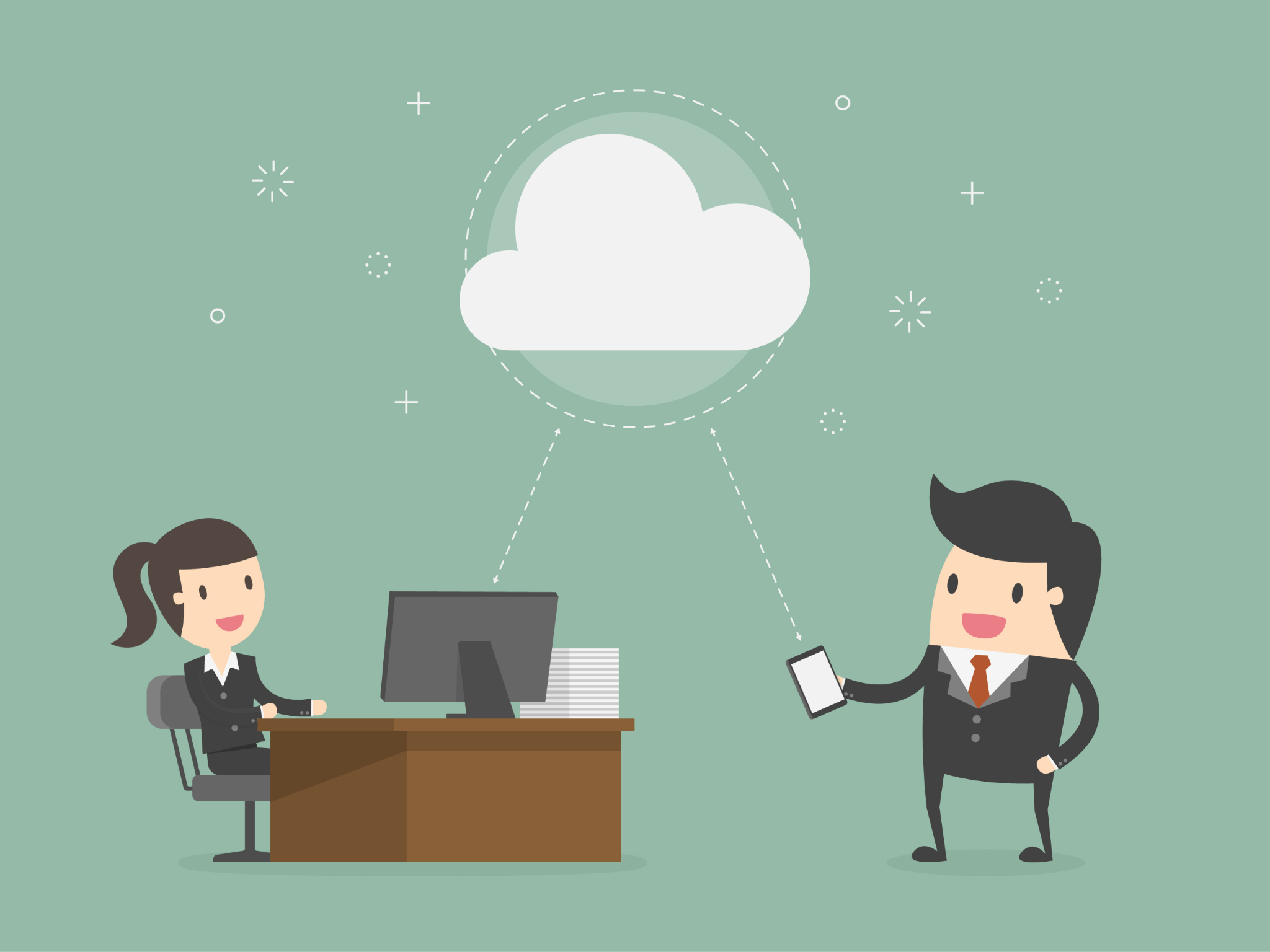
People talk about the cloud as if it floats above the mess of normal computing. The word helps. It sounds clean, light, almost frictionless. Files appear on your phone, apps scale overnight, backups happen somewhere far away, and the hard parts seem to disappear behind a login screen. That story works well for sales decks. It falls apart the minute you look at what the cloud actually is.
The cloud is not a mist of pure convenience. It is a stack of physical machines in buildings that use land, power, cooling, fiber, staff, backup systems, and strict routines. Those machines sit in racks. Those racks sit in data centers. Those data centers sit in real places with weather, grid limits, security guards, diesel generators, fire suppression gear, and maintenance schedules. The cloud feels abstract because someone else owns the hardware and hides the noise from you. That is the whole trick.
This matters because abstraction changes behavior. Once people stop seeing the machines, they also stop thinking about cost, waste, duplication, and risk. Storage feels infinite, so teams keep everything. Compute feels instant, so developers spin up workloads and forget them. Software feels detached from infrastructure, so managers talk about “moving to the cloud” as if they are leaving the old world behind. They are not leaving anything behind. They are renting somebody else’s industrial setup, with better tooling and bigger scale.
That gap between perception and reality shows up in strange places. A person will think twice before buying another physical server, but they will approve a growing cloud bill for months because nothing arrives at the office. A business will treat its old server closet as a cost center, then treat constant cloud consumption as normal operating flow. Even online behavior follows the same pattern. People understand that streaming, syncing, backups, image hosting, ad systems, and even niche traffic spikes, like a surge from searches around aussie online pokies, all land somewhere physical in the end. The internet still runs on machines, not atmosphere.
Why the “cloud” label stuck
The term came from network diagrams. Engineers used a cloud shape to represent outside networks they did not need to draw in detail. The symbol stood for complexity that existed, but stayed off the page. Over time, that symbol turned into a business category. Then it turned into a habit of speech. Now it often stands in for almost anything hosted outside your own building.
That shift had real value. It let companies buy computing as a service instead of building every piece themselves. It reduced the need for many firms to run small, badly managed server rooms in back offices. It gave startups access to serious infrastructure without huge up-front spending. It let teams deploy software across regions without signing leases and waiting for equipment. Those are real gains. The problem starts when the language makes people forget what they are buying.
A cloud provider does not suspend your data in air. It stores data on disks and flash arrays, moves it across networks, replicates it for durability, watches for hardware failure, and charges you for each part of that chain. The easier the interface gets, the easier it becomes to ignore what sits underneath.
The server room never went away
Old server rooms were easy to picture. You could hear the fans. You could feel the heat at the door. You knew one bad cooling week in July could turn into a problem. That physical closeness created discipline. Capacity had edges. Someone had to ask whether a new system justified another machine, another UPS, another switch, another maintenance contract.
Cloud computing removes that physical feedback. The limits still exist, but they move offsite and show up later, usually as invoices, performance issues, or compliance trouble. That makes cloud systems feel cleaner than they are.
Under the hood, the basics remain the same. Applications need compute, storage, memory, and network access. Databases need backups and failover. Traffic spikes need load balancing. Sensitive systems need access controls, logging, and patching. Disaster recovery still means copies in other places. None of this became less material. It became easier to provision and harder for nontechnical people to see.
In practice, many companies did not escape infrastructure work. They changed its shape. Instead of replacing failed disks in-house, they now manage identity rules, service limits, cost anomalies, regional replication, container sprawl, and third-party dependency chains. The labor did not vanish. It moved up a layer.
Convenience hides cost
The strongest feature of cloud services is convenience. That same feature creates waste. When it takes five minutes to launch a new database or storage bucket, people launch first and review later. Test systems stay online. Old snapshots pile up. Teams keep duplicate logs because deleting feels riskier than retaining. One product turns into five environments, then ten, then shadow tools appear around the edges.
This is not unusual. It is how most rented infrastructure behaves when nobody keeps tight controls. The meter keeps running, and the physical costs sit behind a polished dashboard.
There is also a mental trick at work. Capital expense feels heavy because it is visible. Operating expense slips by because it spreads out over time. A company once had to argue over a server purchase order. Now it absorbs monthly compute charges that add up to far more over a year. The cloud often saves money at small scale or during uneven growth. It also gets expensive fast when workloads stay busy all day, all year, with no serious cleanup.
That does not make cloud pricing dishonest. It makes it easy to misuse. Renting flexibility works best when you actually use flexibility.
The environmental side is less magical too
Cloud marketing often sounds cleaner than on-premise computing, and sometimes that claim holds up. Large providers can run modern facilities, use better cooling methods, place data centers near stronger power infrastructure, and keep average hardware utilization higher than many small private setups. Scale helps. Shared systems often waste less than thousands of underused company-owned machines.
Still, the cloud is not weightless. Data centers consume huge amounts of electricity. Cooling systems, backup power, network gear, and constant availability all carry a footprint. Every duplicated file, idle workload, endless video archive, and forgotten analytics job lives on hardware that draws power somewhere.
The hard part is that convenience encourages more use. That pattern matters more than people admit. When storage gets cheap, demand grows. When computing gets easy to buy, software expands to fill the space. This is the same story seen in many utility systems. Efficiency gains help, then behavior changes and total use rises anyway.
So the honest environmental view is plain. Centralized cloud systems can be better run than scattered local server rooms. They are still industrial infrastructure. Cleaner than a mess is not the same as clean.
Control, trust, and the trade you make
Using the cloud means handing part of your operation to another company. Sometimes that trade makes perfect sense. Few businesses want to manage physical security, network redundancy, hardware replacement, and global availability on their own. Renting those capabilities from a major provider is rational.
But trust has a cost. Outages happen. Regions fail. Credentials get exposed. Vendor lock-in creeps up slowly, then becomes painful. A company builds around one provider’s tools and wakes up years later with architecture that is hard to move and expensive to maintain. This is not rare. It is a common side effect of convenience.
The old line, “there is no cloud, just someone else’s computer,” is a bit too simple now, but it points in the right direction. Today it is someone else’s computer, plus someone else’s networking, storage layer, observability stack, security model, automation system, and billing logic. You gain speed. You lose some direct control. That trade needs adult judgment, not slogans.
Seeing the cloud clearly
The useful way to think about the cloud is not as magic, and not as a scam either. It is rented infrastructure with excellent tooling, massive scale, and real tradeoffs. It can be the right call for a startup, a media platform, a bank, a school, or a global software company. It can also become an expensive, messy habit when nobody treats it like infrastructure.
Clear thinking starts with simple honesty. Your photos live on disks. Your app runs on servers. Your backups occupy storage arrays in buildings with cooling systems and security fences. Your traffic crosses cables, routers, switches, and peering links. The cloud did not erase the machine room. It took it out of sight.
That change is useful. It is not magical. Once you see that, better decisions follow. Teams design with cost in mind. They delete what they do not need. They measure workloads instead of assuming endless scale. They ask better questions about vendors, regions, redundancy, and energy use. Most of all, they stop talking as if computing escaped the physical world.
It never did. The server room is still there. It is just farther away, larger than most people imagine, and run by somebody else.